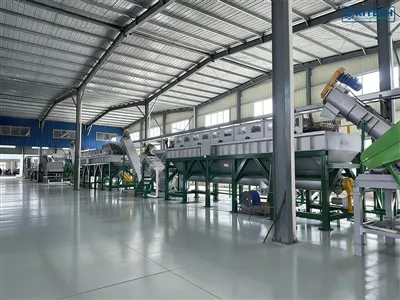
The basic components of an industrial grinding mill vary depending on the type of equipment (such as Raymond mill, ball mill, rod mill, etc.) and specific application, but generally include the following core components:
Grinding components: These include grinding rollers, grinding rings, liners, and grinding media (such as steel balls, steel segments, zirconia beads), directly responsible for crushing and refining the material. For example, Raymond mills are equipped with patented grinding roller assemblies and high-pressure grinding devices, while ball mills rely on steel balls inside the cylinder for impact grinding.
Transmission system: This consists of a motor, reducer, coupling, and gears, providing power to the equipment and regulating the rotational speed. For example, the central shaft speed of a Raymond mill is typically 60-170 rpm, with power transmission achieved through the reducer gears.
Classification and powder sorting devices: Such as analyzers and cyclone separators, used to classify the particle size of the ground material to ensure the finished product meets requirements. The analyzer in a Raymond mill can adjust the finished product particle size within the range of 80-325 mesh. Feeding and Discharge Devices: These include the feeder, feed screw conveyor, and discharge hood, ensuring uniform and continuous material input and the discharge of qualified products. Rod mills typically use a shoe-shaped hopper for feeding, and the material is discharged through the discharge hood after the cylinder rotates.
Support and Structural Components: These include the cylinder, main bearing shells, bearing seats, and hollow shafts, forming the main frame of the equipment and supporting rotating parts. In ball mills, the cylinder is driven by a large gear ring and a small gear, and supported by the main bearing shells.
Auxiliary Systems: These include fans (for airflow and classification), lubrication systems (to reduce friction and wear), cooling systems (to prevent overheating), and safety devices. Raymond mills are equipped with fans to achieve material circulation, while the lubrication system ensures the long-term operation of the transmission components.