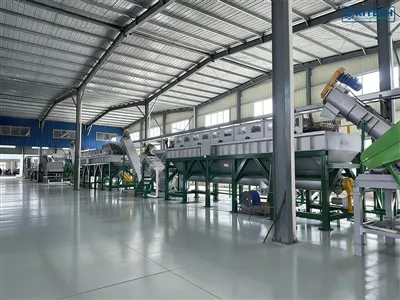
A plastic washing production line can effectively recycle waste plastics, achieving resource reuse. Correct installation is crucial for its subsequent stable and efficient operation. The following details the key points for installing a mineral water bottle crushing and washing production line.
1. Site Planning
Before installing the production line, the site space must be fully considered. The production line consists of multiple pieces of equipment, including crushers, washing machines, and dewatering machines, and each piece of equipment needs to be rationally arranged. Generally, a smooth material conveying route should be planned according to the production line's process flow. Ensure sufficient operating space around each piece of equipment for easy operation by staff during installation and commissioning, and also consider the convenience of future maintenance and repair. The ground must be level and its load-bearing capacity must meet the weight requirements of the equipment during operation. Reinforcement is usually required to prevent damage or instability caused by uneven ground settlement during operation.
2. Equipment Inspection
Upon receiving the equipment, carefully inspect each component for damage, deformation, etc. Check if the crusher blades are sharp and free of cracks, and if the belts are worn and elastic. Check if the washing machine nozzles are clogged and if the washing tank is leaking. Carefully inspect the dewatering machine's screen for damage and ensure the motor operates normally. For any problems found, promptly communicate with the supplier for replacement or repair to avoid initial equipment issues affecting subsequent installation and production. Simultaneously, check the equipment list to ensure all components are present, and accurately count all connecting bolts, nuts, washers, and other small parts.
3. Tool and Material Preparation
Prepare all necessary tools for installation. Common tools such as wrenches, screwdrivers, and electric drills should be readily available. Specialized tools, such as dedicated disassembly and calibration tools provided by the equipment supplier, should also be prepared. Additionally, prepare materials needed during installation, such as sealant, lubricating oil, and a level. Sealant is used to prevent leaks at equipment connections, and the lubricating oil should be selected according to the equipment manual to ensure proper lubrication of all moving parts and reduce wear.