


Hey there! As a supplier of granulator machines, I'm super stoked to walk you through how a centrifugal granulator machine operates. It's a pretty cool piece of tech, and understanding its operation can give you a better idea of why it might be the right fit for your business.
Let's start with the basics. A centrifugal granulator machine is mainly used for turning materials into granules. It's got a bunch of industrial applications, from plastics to chemicals and even in the food industry. In a nutshell, it takes raw materials, processes them, and spits out nice, uniform granules.
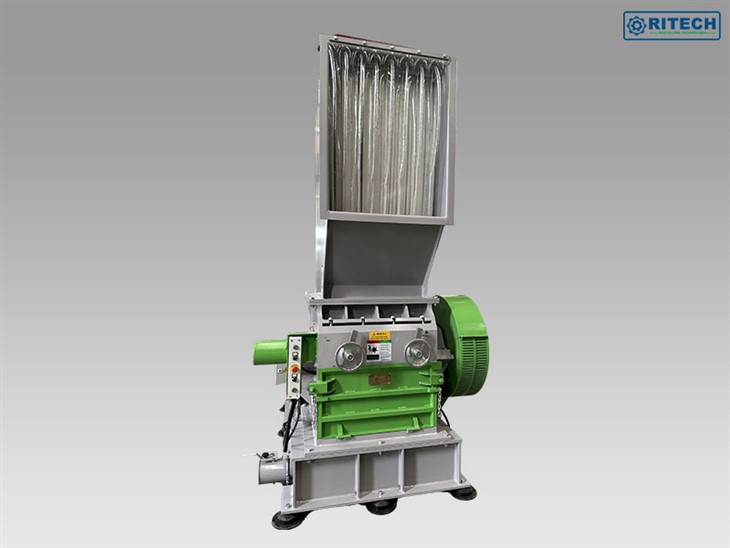
So, how does it actually work? Well, it all begins with the feeding process. You'll load the raw materials into the hopper of the machine. The hopper acts like a storage area, making sure there's a steady supply of material going into the granulation chamber. We've designed our machines to have a pretty user - friendly hopper, so it's easy to load different types of materials without much hassle.
Once the materials are in the hopper, they drop down into the granulation chamber. This is where the real magic happens! Inside the chamber, there's a high - speed rotating disk. This disk is key to the whole granulation process. As it spins, it creates a centrifugal force. That's the force that's pulling everything outwards, kind of like when you're on a merry - go - round, and you feel like you're being pushed to the edge.
The raw materials that fall onto the spinning disk are immediately affected by this centrifugal force. They're flung out towards the edge of the disk. Along the way, they encounter a series of blades or paddles. These blades are carefully positioned to break up the materials and shape them into smaller pieces. It's like a mini - chopping party inside the granulation chamber!
As the materials get chopped up, they start to form into granules. But the process doesn't stop there. The newly formed granules continue to move outwards due to the centrifugal force. They then pass through a screening mechanism. This screen is set to a specific size, which means only granules that meet the desired size can pass through. Any larger particles get recirculated back into the granulation chamber for further processing.
It's a really efficient system. The continuous recirculation ensures that you get high - quality, uniform granules in the end. And let me tell you, our centrifugal granulator machines are designed to be super precise with the screening. We've fine - tuned the settings so that you can get exactly the granule size you need for your specific application.
Now, I want to mention some of our other great products. We also offer Plastic Powder Milling Machines. These machines are perfect for taking plastics and turning them into fine powder. They're highly efficient and can handle a wide variety of plastic materials.
Another great option is our Waste Reduction Grinder Machine. It's ideal for reducing the volume of waste materials. If you're looking to be more environmentally friendly and save on waste disposal costs, this machine is a no - brainer.
We also have a Pipe Grinder in our product lineup. It's designed to handle pipes of different sizes and materials, turning them into manageable granules. And for those working with cable wires, our Cable Wire Grinder Machine is a game - changer. It can efficiently process cable wires and separate different components.
If you're more into producing plastic powder, our Plastic Powder Mill Machine is a top - notch choice. It's engineered for high - performance and can produce consistent plastic powder.
After the granulation process in the centrifugal granulator is complete, the granules are collected at the output end. You can then use these granules for various purposes, depending on your industry. For example, in the plastics industry, these granules can be used for injection molding or extrusion. In the food industry, they can be used as ingredients for various food products.
Maintaining a centrifugal granulator machine is also relatively straightforward. Regular cleaning of the chamber, blades, and screens is essential to keep the machine running smoothly. We provide detailed maintenance guides with all our machines, so even if you're new to granulation, you can easily take care of your equipment.
One of the big advantages of using a centrifugal granulator is its speed. It can process materials at a pretty high rate, which means you can increase your production efficiency. Whether you're a small - scale operation or a large - scale manufacturing plant, having a machine that can churn out a large volume of granules in a short time is a huge plus.
Another plus is its versatility. The centrifugal granulator can handle a wide range of materials, from soft and brittle substances to more rigid and tough materials. This makes it a great investment for businesses that deal with different types of raw materials.
If you're in the market for a centrifugal granulator machine or any of our other products, I highly encourage you to get in touch. We have a team of experts who can answer all your questions and help you pick the right machine for your needs. Whether it's about the technical details, pricing, or shipping, we've got you covered.

So, don't hesitate! Reach out to us and let's start a conversation about how our granulator machines can take your business to the next level. Whether you're just starting out or looking to upgrade your existing equipment, we're here to support you every step of the way.
References
- "Industrial Granulation Technology" by Pieter York. This book provides in - depth information on different granulation processes and equipment.
- "Handbook of Plastic Recycling" which offers insights into the use of granulator machines in the plastic industry.


