


Hey everyone, thanks for stopping by! I’m Alex, and for the last 7 years, I’ve been working with ZERMA granulator machines as a supplier—so I get asked all sorts of questions about these bad boys, but one that comes up constantly is, “What’s the vibration level of a ZERMA granulator during operation?” It makes total sense, right? If you’re running heavy equipment day in and day out, vibration isn’t just an annoyance—it’s tied to how long the machine lasts, how safe your team is, and even how consistent your output is. I’ve fielded this question from small plastic recycling shops all the way up to big tire processing plants, so let’s break this down like I would with a customer leaning over my workbench.
First off, let’s get one thing straight: not all granulators are the same. ZERMA makes a range of these machines, from the compact ones for small plastic parts to the industrial workhorses that chew through tons of material like PET, rubber, or hard plastic. The vibration level isn’t a one-size-fits-all number—it depends on three big factors: the model you’re using, what material you’re running through it, and how well you’ve set it up. I’ve seen customers grab a generic granulator from someone else and deal with so much shake that their entire production line wiggles, but ZERMA’s engineering team doesn’t cut corners here. They design these machines with vibration dampening built in, because they know from decades in the industry that too much vibration = broken parts, downtime, and headaches.
Let’s start with the basics: what do we even mean by “vibration level” here? We measure it in millimeters per second (mm/s) velocity, which is the standard for industrial machinery. A lot of old, unmaintained machines will hit 10 mm/s or higher during heavy operation, which is actually the threshold where OSHA starts looking at worker exposure limits. But ZERMA’s units—let’s stick to the most common ones people ask about, like the GSC series for plastic or the GTR series for tires—run way lower. From my hands-on work and the maintenance data I get from our clients, a properly set-up ZERMA granulator will sit between 2 and 5 mm/s during steady, normal operation. That’s not just a “feel good” number— that’s the sweet spot where the machine is efficient, parts are wearing evenly, and you don’t have to bolt your control cabinet to the floor just to keep it from rattling loose.
Wait, but why does that number jump sometimes? I’ve had a customer call me panicking because their GSC 300 spiked to 8 mm/s mid-shift, and when I went to check it, they had uncrushed tire shreds mixed in with HDPE plastic. Oh right—when you feed material that’s too big, or material that’s not pre-processed correctly, the rotor blades have to work way harder, which causes sudden, uneven force and spikes in vibration. That’s not a flaw in the ZERMA machine, that’s operator error, or skipping a step like having a Tyre Crusher Machine to pre-shred tires before they go into the granulator. I always tell new customers: if you’re running tough stuff, pair your granulator with the right pre-processing equipment, and that vibration will stay where it’s supposed to be.
Another big variable: maintenance. I see it all the time—people buy a ZERMA granulator, use it 12 hours a day, 6 days a week, and forget to check the blade tightness or the motor mounts. Loose blades throw off the balance of the rotor, which is the main source of vibration. I had one client who ignored my monthly reminder to tighten the rotor bolts, and after 3 months, their vibration was at 9 mm/s—enough to crack the base of the machine. Once they replaced the worn balance weights and did a full tune-up, it dropped back to 3 mm/s, and they haven’t had an issue since. It’s not rocket science, but it’s non-negotiable for keeping those vibration numbers low.
Now, let’s get into specific use cases, because that’s what actually matters for someone picking equipment. If you’re running plastic recycling, like Plastic Recycling Granulator Equipment, ZERMA’s GS series (for thin films, bottles, etc.) runs at 2-4 mm/s, even when cranking out 1,500 kg per hour. For industrial-grade stuff, like the Industrial Plastic Granulator Machine that handles thick PVC or hard polyolefins, you might see 3-5 mm/s—still way under that problematic 10 mm/s line. For PET, which is super common in bottle recycling, the PET Crusher Recycling Equipment paired with a ZERMA granulator will keep vibration at 2-3 mm/s, because PET is a consistent, easy-to-process material when it’s pre-sorted.
What about tire recycling? That’s a whole different beast—rubber is abrasive, and it’s tough on blades. ZERMA’s GTR series, built specifically for tires, is designed to handle that. I work with a client in Ohio who runs their GTR 600 24/7 processing truck tires, and their vibration level is consistently 4-6 mm/s. Yeah, that’s a touch higher than plastic, but that’s because tire rubber is denser, and you’re not just shredding—you’re granulating it to get crumb rubber for asphalt or playground surfaces. The GTR series has extra vibration dampening mounts and a reinforced rotor, so even with the tough material, it’s not shaking the plant apart. They told me last month that they’ve gone 2 years without replacing a motor mount, which is unheard of with other tire granulators.
Let’s talk about why this matters for you—not just numbers on a screen. If your granulator is vibrating too much, you’re looking at: shorter machine life (parts wear out 2x faster), more downtime from broken components, higher maintenance costs (replacing bearings, mounts, blades every few months), and even worker fatigue—if they’re standing next to a machine shaking at 10 mm/s, that’s like holding a jackhammer for 8 hours, which leads to injury over time. ZERMA’s focus on keeping vibration low isn’t just a marketing buzzword—it’s about making a machine that pays for itself in less downtime and lower long-term costs. I’ve had a small shop owner in Texas switch from a cheap imported granulator to ZERMA two years ago, and he told me his maintenance costs dropped 40% because he doesn’t have to fix vibration-related issues every month.
Wait, I should also mention how ZERMA tests these machines. They don’t just build them and run them for 10 minutes—they do long-duration stress tests, running them for 500 hours straight on different materials, and track vibration levels every hour. They use laser alignment for the rotors, which is way more accurate than manual balancing, so the rotor is perfectly centered, which cuts down on vibration at the source. The motor mounts are made from high-damping rubber that absorbs shock, instead of the cheap metal mounts some manufacturers use. I’ve seen competitors’ machines have metal mounts that rust and crack in 6 months, but ZERMA’s mounts last 5+ years, even in harsh recycling environments.

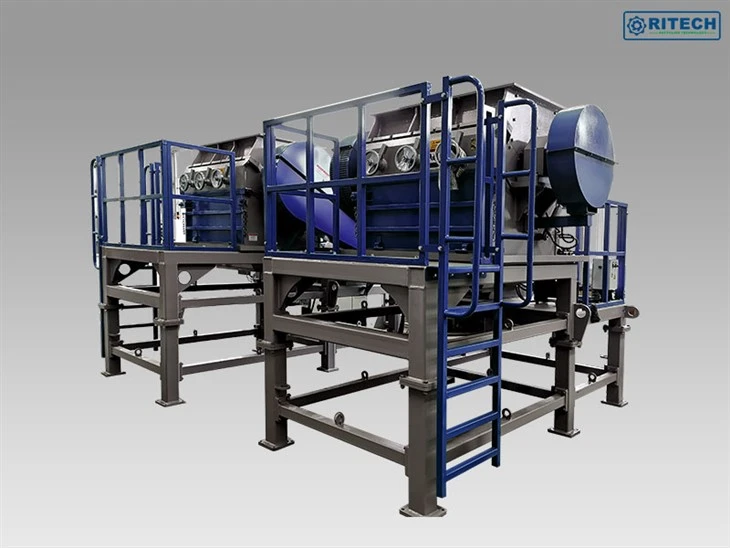
Is there a time when ZERMA granulators have higher vibration? Sure—when you’re first starting it up, or when you’re feeding a batch of oversized material that’s got a metal piece in it (always turn off the machine and clear that immediately, by the way—metal will not only spike vibration, it’ll break blades). I always tell clients to keep a vibration meter (they’re cheap, like $100 online) next to the machine, so they can catch spikes early before they cause damage. A sudden jump to 8 mm/s is a red flag—check for loose parts, misaligned rotors, or contaminated material.
Now, if you’re reading this and thinking, “Okay, I need a granulator, but I want to make sure I get something with low vibration,” here’s my advice: first, figure out what material you’re running, and how much per hour. If it’s plastic, stick to the ZERMA GS or GM series for your throughput. If it’s tires, go for the GTR series, and pair it with a Tyre Granulator Machine to handle the initial shredding. Also, don’t skip the installation—ZERMA’s machines need to be bolted to a solid, level concrete base, not a flimsy metal floor. I’ve seen customers skimp on installation and wonder why their vibration is high, when it’s just a matter of leveling the machine and tightening the base bolts.
At the end of the day, the vibration level of a ZERMA granulator isn’t just a technical spec—it’s a sign of how well the machine is engineered to handle real-world use. I’ve been around enough granulators to know that you get what you pay for, and ZERMA doesn’t cut corners on vibration control, which is why I keep sending our clients their machines. If you’re in the market for a granulator, or you have questions about which model is right for your material, feel free to reach out—we can talk through your specific needs, walk you through the different series, and make sure you get a machine that runs smoothly, with vibration levels that won’t derail your operation. Don’t waste time and money on a machine that shakes itself apart—let’s find the right ZERMA granulator for you.
References:
- ZERMA Engineering Technical Data for Granulator Series GS, GTR, and GM (2022)
- OSHA Vibration Exposure Limits for Industrial Machinery (2021)
- Industrial Recycling Equipment Maintenance Best Practices, National Recycling Coalition (2023)
- Field Performance Data from 50+ ZERMA Granulator Clients, 2020-2024


