


Can a PVC Granulator Machine be Used for PVC Foam Granulation?
As a supplier of PVC granulator machines, I often receive inquiries from customers about the versatility of our equipment, particularly about whether a standard PVC granulator can be used for PVC foam granulation. This is a valid question, considering the unique properties of PVC foam and the need for specialized equipment in certain plastic - processing applications. In this blog, I will delve into the technical aspects to determine if a PVC granulator machine can indeed be used for PVC foam granulation.
Understanding PVC and PVC Foam
PVC, or polyvinyl chloride, is a widely used thermoplastic known for its durability, chemical resistance, and relatively low cost. It has a wide range of applications, from pipes and fittings to flooring and packaging. PVC foam, on the other hand, is a cellular form of PVC that contains gas bubbles, which gives it unique properties such as low density, good insulation, and high impact resistance.
The production of PVC foam involves adding a blowing agent to the PVC resin during the processing. The blowing agent decomposes at a specific temperature, releasing gas that forms the bubbles within the PVC matrix. This process results in a material with a different physical structure compared to regular PVC.
Working Principles of a PVC Granulator Machine
A PVC granulator machine is designed to convert PVC materials into small, uniform granules. The basic working principle involves feeding the PVC material into the machine, where it is heated and melted. The molten PVC is then forced through a die with small holes, and the extruded strands are cooled and cut into granules.
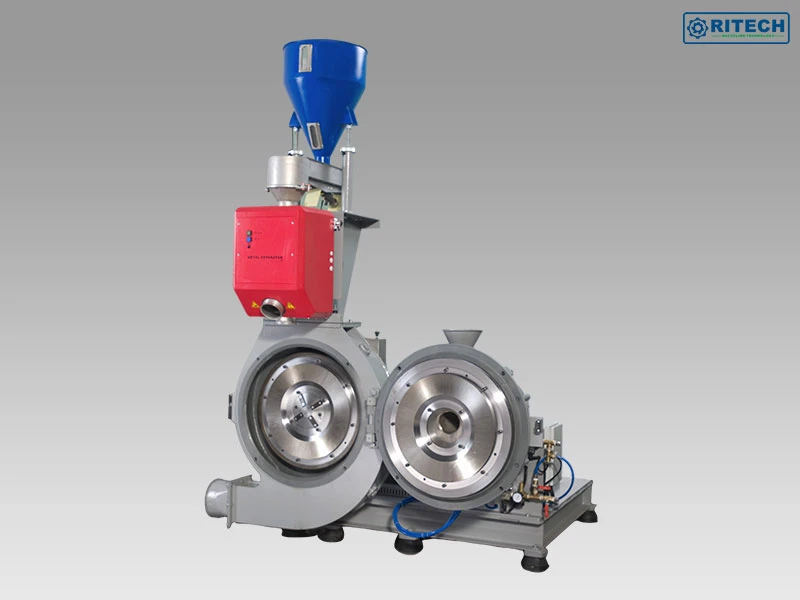

There are different types of PVC granulator machines available on the market, each with its own features and capabilities. For example, Plastic Powder Mill Equipment can be used to pre - process PVC powder before granulation, while Heavy - Duty Industrial Granulators are designed to handle large volumes of PVC materials.
Challenges in PVC Foam Granulation
When it comes to PVC foam granulation, there are several challenges that need to be addressed. Firstly, the presence of gas bubbles in PVC foam can make the material more difficult to handle. The bubbles can cause the material to be less cohesive, leading to issues such as poor cutting and uneven granule size.
Secondly, the blowing agent used in PVC foam production can have an impact on the granulation process. The decomposition temperature of the blowing agent needs to be carefully controlled to ensure that the gas is released at the right time. If the temperature is too high, the blowing agent may decompose prematurely, resulting in a loss of the foam structure. If the temperature is too low, the blowing agent may not decompose fully, leading to incomplete foaming.
Can a Standard PVC Granulator be Used?
In some cases, a standard PVC granulator machine can be used for PVC foam granulation, but certain modifications may be required. For example, the cutting mechanism of the granulator may need to be adjusted to handle the less - cohesive PVC foam material. A sharper blade or a different cutting speed may be necessary to ensure clean cuts and uniform granule size.
The heating and melting system of the granulator also needs to be carefully controlled. The temperature profile should be optimized to prevent premature decomposition of the blowing agent. This may involve using a more precise temperature control system or adjusting the heating rate.
However, for large - scale and high - quality PVC foam granulation, it is often recommended to use specialized equipment. Specialized PVC foam granulators are designed to address the unique challenges of PVC foam processing, such as better control of the gas release and more precise cutting.
Advantages of Using a Specialized PVC Foam Granulator
Specialized PVC foam granulators offer several advantages over standard PVC granulators when it comes to PVC foam granulation. Firstly, they are designed to handle the specific properties of PVC foam, such as its low density and the presence of gas bubbles. This results in more uniform granules and higher - quality products.
Secondly, specialized granulators often have more advanced temperature control systems, which can ensure that the blowing agent decomposes at the right time and temperature. This leads to better - defined foam structures and consistent product quality.
Finally, using a specialized PVC foam granulator can increase production efficiency. These machines are optimized for PVC foam processing, which means less downtime due to equipment adjustments and fewer product defects.
Our Product Range and Solutions
As a supplier of PVC granulator machines, we offer a wide range of products to meet the different needs of our customers. Our Tray Granulator Machine is suitable for small - scale PVC granulation, while our Recycling Granulator Machine and Plastic Recycling Granulator are designed for recycling PVC materials.
For customers interested in PVC foam granulation, we can provide both standard PVC granulators with necessary modifications and specialized PVC foam granulators. Our technical team can work closely with you to understand your specific requirements and recommend the most suitable solution for your business.
Contact for Purchase and Consultation
If you are considering investing in a PVC granulator machine for PVC foam granulation or have any questions about our products, please do not hesitate to contact us. We are here to provide you with detailed product information, technical support, and cost - effective solutions. Whether you are a small - scale manufacturer or a large - scale industrial enterprise, we can help you find the right equipment to meet your production needs.
References
- "Plastics Processing Handbook" by O. Olabisi
- "Polyvinyl Chloride (PVC) Technology" by W. V. Titow


