


Hey everyone, if you’ve ever run a small workshop—say a custom fabrication spot, a recycling hub with just 3-5 people, or even a small-scale manufacturing space that deals with leftover barrels of all types—you’ve probably stared at a stack of dented plastic, metal, or even wooden barrels at some point and thought: “There’s gotta be a better way to get rid of these than hauling them to the dump for a tiny check.”
That’s exactly the question I get all the time as a barrel shredder supplier for small businesses: Can a barrel shredder even work in a tiny workshop? I know it seems counterintuitive at first—big industrial shredders look loud, bulky, and like they’d take up half your workspace, right? But after talking to dozens of small workshop owners over the past few years, the short answer is: Yes, it totally can—you just have to pick the right one, and I’m here to break down why and how it fits your space, budget, and workflow.
First, let’s get real about what a small workshop actually needs. Most folks with under 10,000 sq ft of space don’t have a ton of extra room for massive 10-foot-long machines. A lot of people assume barrel shredders are only for big recycling plants that process hundreds of barrels a day, but that’s not the case. The key here is differentiating between full-scale industrial shredders and compact, workshop-sized models built for low-to-medium throughput—like, processing 10-50 barrels a day, not 500.
Wait, let’s talk about use cases first because that’s where a lot of people mess up. If your small workshop generates barrels as waste (say, you’re a auto body shop that keeps paint thinner and chemical barrels, or a woodworking shop that uses leftover stain in plastic drums), a barrel shredder turns those bulky, hard-to-store barrels into uniform chips that take up way less space for disposal or reselling. I recently worked with a guy in Ohio who runs a small metal fabrication shop—he used to rent a roll-off dumpster for barrels every month for $400, and now with a compact barrel shredder, he cuts his dumpster needs in half and even sells the shredded metal chips to a local scrap yard for $50 extra a month. That’s not chump change for a small business, right?
But here’s the catch: You can’t just buy any shredder and plop it in your workshop. A lot of small workshops have noise restrictions, too—if you’re located in a small industrial park or even a mixed-use area, a super loud shredder could get you a noise complaint from a neighbor. That’s why a lot of my customers go for something like the ZERMA GSC Soundproof Crusher, which I always mention because it’s built with a noise-dampening enclosure that cuts operation noise down to under 75 decibels—about as loud as a vacuum cleaner, way easier to work around without disturbing anyone nearby. I’ve had one customer in a residential-adjacent workshop use this exact model for two years and hasn’t had a single noise complaint, which is a huge win for small spaces.

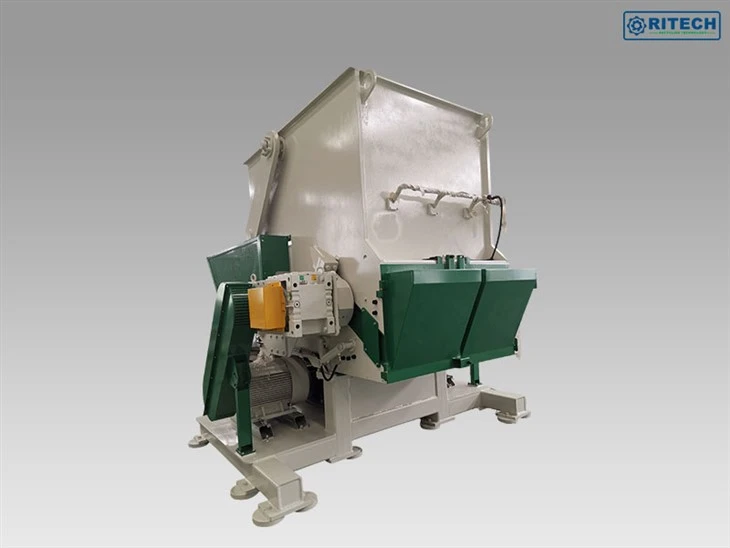
Now, let’s address the space question. I know you’re thinking: My workshop’s already packed with tools, workbenches, inventory—where do I put a shredder? Here’s the thing: Compact barrel shredders for small workshops are usually around 4-6 feet long, 3 feet wide, and 5-6 feet tall. That’s smaller than most pressure washers, or even a standard pickup truck bed. A lot of people tuck them in a corner near their waste storage, or even in a small outdoor lean-to if their workshop has extra outdoor space. I had a customer in Texas who runs a small plastic recycling workshop and put his compact shredder right next to his loading dock—no need to clear out half his shop to make room.
Another common worry: Power. Small workshops usually don’t have 3-phase industrial power, right? Most compact barrel shredders run on standard 110V or 220V household power, which is a game-changer for small businesses that don’t want to rewire their entire shop just for a new machine. A lot of the bigger industrial shredders need 3-phase, but that’s overkill for a small workshop. I always tell customers to check their power supply first, then look for shredders labeled “single-phase compatible”—that’s the sweet spot for small spaces.
Wait, but what about other materials? If your workshop handles more than just barrels—like plastic scraps, woven bags from shipping, waste cloth from textile projects, or general plastic waste—you might not need a separate machine for that. A lot of the compact shredders I supply are multi-functional, so you can use them for barrels and other small waste streams. For example, if you’ve got leftover woven bags from shipping your workshop materials, you can run those through the same shredder without needing a separate Woven Bags Shredder Machine. Same with waste cloth—many models will handle that too, so you’re not cluttering up your workshop with a bunch of different machines. That’s a big space-saver right there.
Now, let’s talk about throughput, because that’s the actual measure of whether it’s worth it for a small workshop. If you only process 2-3 barrels a week, a barrel shredder might not make sense—hauling them to the scrap yard or waste facility is probably cheaper. But if you’re processing 10+ barrels a month, and especially if you can sell the shredded material, it’s a no-brainer. I had a customer in Florida who runs a small citrus processing workshop—they use 55-gallon plastic barrels for juice concentrate, and once they’re empty, they used to pay $2 per barrel to have them picked up. Now with a compact shredder, they process 15 barrels a week into small plastic chips, sell them to a local plastic pellet maker for $0.30 per pound, and make back around $75 a month—plus, they don’t have to wait for a pickup, which saves them time on scheduling waste removal.
But wait, is it safe? I know running a shredder in a small space makes some people nervous. But modern compact barrel shredders have built-in safety features—like emergency stop buttons on both the machine and the remote, and infeed guards that stop the blades if anything gets pulled in. They’re also designed to be easy to maintain—no heavy, complicated upkeep. I always walk new customers through basic maintenance: wiping down the blades once a week, checking the power cord for damage, and sharpening the blades every 6-12 months depending on use. It’s way simpler than maintaining a big industrial machine, perfect for a small workshop where you don’t have a dedicated maintenance guy.
Let’s also compare it to other options, because that’s what a lot of small business owners do. Some might think: “Why not just flatten barrels manually and haul them?” If you have 5 barrels, that’s manageable, but after that, manual flattening takes time and leaves sharp edges that can cut you or tear up your gloves. A shredder does it in minutes, no sharp edges left, and the uniform chips are way easier to store or transport. Others might consider a smaller plastic crusher—wait, a Soundproof Crusher is another great option if your barrels are mostly plastic, right? It’s even more compact than a barrel shredder for plastic, and designed for lower throughput. The key is matching the machine to your barrel material: metal barrels need a shredder with stronger blades, plastic barrels can work with either a crusher or a shredder, depending on how much you process.
Now, let’s get real about common misconceptions. A lot of people think “barrel shredder = super heavy, hard to move.” But compact workshop shredders are built with casters—you can wheel them around your workshop if you need to rearrange space. That’s a huge plus for small spaces where flexibility matters. Another myth: They’re expensive. Wait, I won’t lie, a good compact barrel shredder isn’t cheap—but it’s way cheaper than renting dumpsters monthly, paying for waste pickup, or hiring someone to process barrels manually. Most small workshop models fall in the range of $5,000 to $15,000, depending on features (soundproofing, single-phase power, throughput). For context, my Ohio fabrication customer paid $8,000 for his, and saved $4,800 a year on dumpster fees plus made $600 a month from scrap chips—so he paid off the machine in 14 months. That’s a solid ROI for a small business.
Wait, what about if your workshop handles multiple types of waste? Like, if you’ve got metal barrels, plastic barrels, and maybe some woven shipping bags, you can use one machine for all of that. I’ve had customers use their barrel shredders for plastic bottles, plastic lids, even small metal scrap parts—so it’s not a one-trick pony. You don’t need a separate Woven Bags Shredder Machine or Waste Cloth Shredder Machine if your compact barrel shredder can handle those too, which most of the ones I supply do. That cuts down on the number of machines in your workshop, which is key for small spaces.
I also want to mention something about support, because that’s a big one for small business owners who don’t have a dedicated tech team. When you buy a compact barrel shredder from a reputable supplier (like, well, the one writing this), you get on-site setup support, 24/7 phone help if something goes wrong, and replacement parts that are easy to get. A lot of big industrial shredder suppliers leave small workshop owners hanging when something breaks, but that’s not the case with the workshop-sized models—they’re designed for small teams, so support is tailored to your needs.
Now, let’s wrap this up with the real, on-the-ground takeaway: A barrel shredder absolutely works in a small workshop, but only if you pick the right compact, single-phase, low-throughput model with safety features and soundproofing if you need it. It’s not for every small business—if you’re only processing a few barrels a quarter, it’s probably not worth it. But if you’re processing a steady stream of barrels, want to cut waste costs, maybe even make a little extra from scrap, it’s a game-changer.
If you’re a small workshop owner staring at a pile of barrels, wondering if a shredder is right for you, I can help you figure out exactly what model fits your space, power, and throughput. No salesy pitches, just honest advice for small businesses. Reach out to talk through your needs—we can even send you specs for compact models, walk you through the cost vs. savings, and help you pick the best machine for your setup.
References:
- Small Business Waste Management Association. (2023). "Cost Savings for Compact Shredders in Micro-Workshops".
- Industry Safety & Noise Control Board. (2022). "Noise Compliance Guidelines for Small Industrial Spaces".
- Plastic Recycling Global Report. (2023). "Economic Benefits of Shredded Plastic Scrap for Small-Scale Processors".
- Metal Fabrication Workshop Association. (2022). "Equipment Guidelines for Small Metal Working Facilities".


